
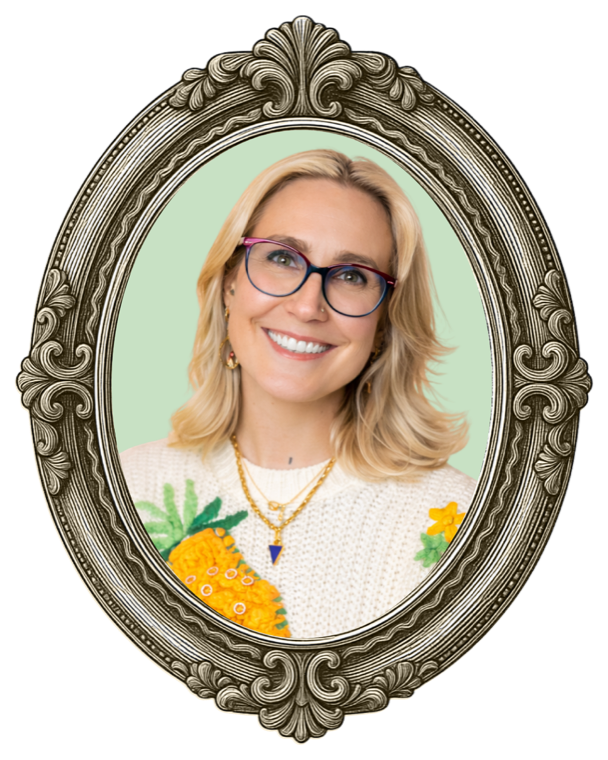
I’m Alice. Yes, really.
I’ve been an HR adviser, an employment solicitor, a founder, a university lecturer and a doctoral researcher. It looks like a winding road. It’s actually one question asked five different ways: what happens to people when their work changes shape, and what helps them through it.
I started my career as an HR adviser before becoming an employment solicitor. I founded and scaled a legal services business — hiring teams, winning clients, building something real — and sold it in 2025. Along the way I won an Innovate UK Women in Innovation Award.
Somewhere in the middle of all that I noticed the same thing happening over and over. The problem in the room was almost never the one on the agenda. The restructure wasn’t failing on the org chart. The technology wasn’t failing on the technology. The difficult decision wasn’t hard because the numbers were unclear. Again and again, the conversation came back to what the change meant for people: what they would have to give up, who they would be at work, and whether they trusted the person asking them to do it.
That’s what I do now. I help law firms and in-house legal teams lead change that people will actually live, and I help the individuals inside that change work out what it means for them.
I also teach. I lecture at the University of Exeter Business School, working with the next generation of HR and business leaders, which keeps me honest — it’s difficult to hide behind jargon in front of a room of people who will ask you what you actually mean.
And I research. I’m a doctoral researcher at the University of Bath, studying how workplace expectations shape professional identity and everyday working lives. That work informs my consulting and teaching, alongside wider organisational research and my experience of building and leading businesses. It’s the least abstract research I could have chosen, because I’ve been the person it happens to.
Lecturer, University of Exeter Business School · Doctoral researcher, University of Bath · Founder, legal services business (sold 2025) · Winner, Innovate UK Women in Innovation Award

Three perspectives
Grounded in research. Shaped by experience. Applied to your situation.
The research side
My doctoral research looks at how workplace expectations shape professional identity and everyday working lives, and I read widely in the organisational research around it. That evidence, and the questions it raises, shapes the advice I give.
The practical side
I’ve built businesses, hired and let people go, led teams through change I couldn’t promise would work, and made the decisions I couldn’t take back. I’ve also been on the receiving end of change I didn’t choose. No theory without practice.
The judgement side
Twenty years across HR, law and technology taught me how to see round corners — where the risk actually sits, and how to get from “we can’t” to “here’s how we can, safely.” I don’t practise law as part of this work, but I’ve never stopped thinking like someone whose job was to spot what everyone else missed.
The human bit
I’m told I’m quite direct. I’d call it useful.
I’d rather tell you the thing nobody’s said out loud than send you away with a tidy report and an invoice.
I’m also, as the whole Wonderland thing suggests, drawn to the moment where the map stops matching the territory — where the sensible next step isn’t obvious and you have to work out who you are before you can work out what to do. That’s the most interesting problem I know, and it’s the one I’ve built a practice around.
Make sense of the madness
Curious?
If any of this sounds like where you are — leading a change that isn’t landing, or standing at a crossroads of your own — the best place to start is a conversation. No pitch deck, no framework.
Ask Alice